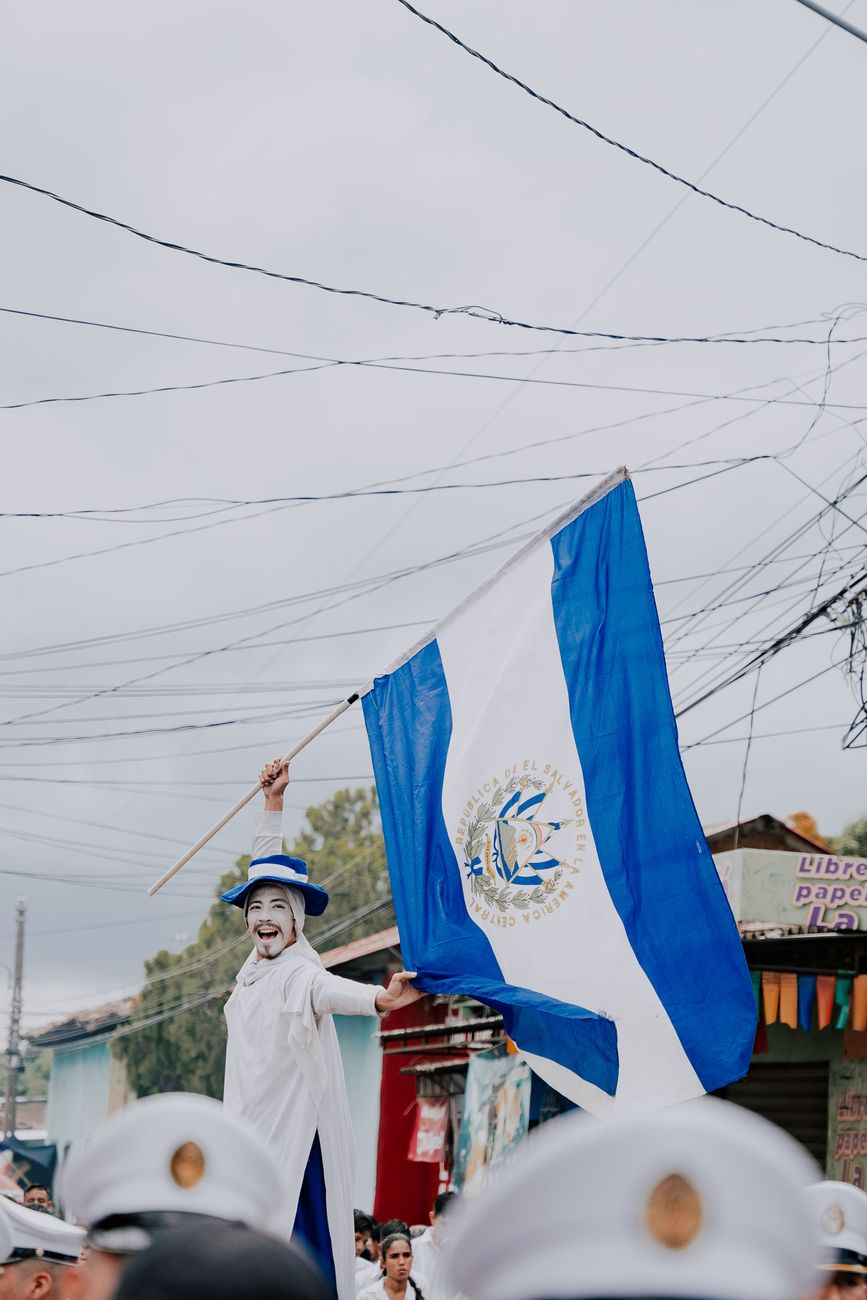
It’s Hispanic Heritage Month.
And, well, fuck it.
I’m Hispanic. More specifically, I’m Salvadoran.
I’ve spent years writing about mental health, creativity, books, science, and whatever else is on my mind, and I almost never talk about this part of myself.
So I’m going to now. Identity and mental health are more connected than we usually admit. How we understand who we are, where we belong, and how other people see us shapes how we feel in our own skin.
Being Mixed
My heritage is mixed. I’m Salvadoran, but I also have Polish, Austrian, German, and French ancestry. For this post I want to focus on the Salvadoran side, the part I’ve rarely centered in my writing or my identity.
Being mixed has made my experience with race and ethnicity complicated. I want to be clear that I haven’t experienced a tremendous amount of racism because I’m Hispanic. That’s my experience, and it doesn’t mean racism doesn’t exist or that other Hispanic people haven’t dealt with far worse.
I think part of it is that, depending on who’s looking, I can benefit from some degree of white-passing privilege. I’ve become more conscious of that over the years. Privilege doesn’t mean you’ve never experienced discrimination. Sometimes you exist in a weird middle ground, benefiting from one part of how society perceives you while being vulnerable to another.
I can be perceived as white by some people.
I can be perceived differently by others because of my heritage.
Both things can be true.
If you’ve spent time in therapy, especially anything dialectical, you’ve probably heard that phrase. Holding two things at once, without forcing one to cancel out the other, is one of the healthiest and hardest skills there is. For me it applies to my identity too.
When It Becomes Real
The first time I clearly experienced something aimed at my Hispanic heritage was around 2020 or 2021. A friend I’d had a falling out with contacted me after I’d made it clear I didn’t want to hear from him, and he called me names related to my heritage.
Then, earlier in 2026, I was on a train with my mom when a man began saying things to both of us, some of it aimed at my heritage. It was awful. I don’t think prejudice stops being prejudice depending on who it comes from, and I don’t think anyone’s identity makes them immune from it.
I don’t want this post to become a story about either of those people. It’s about what those moments did to my understanding of myself.
It’s one thing to know intellectually that racism and ethnic prejudice exist. It’s another to have it pointed at you. Something abstract suddenly becomes very real, and that shift can stay with you.
What I Haven’t Said Yet
I didn’t struggle with depression until after my uncle died in 2019. He was on my dad’s side of the family, and he was like a dad to me.
Grief doesn’t come with a tidy explanation, and I’m not going to pretend it does. But I can’t write about who I am and where I come from without mentioning him.
There Is No Single Experience
For the most part, I’ve been lucky. Because I know that, I don’t want to pretend my experience represents anyone else’s.
There isn’t one universal Hispanic experience, one universal Salvadoran experience, or even one universal experience of being mixed. People can share a piece of an identity and have completely different lives, shaped by things as simple as what you look like, what your name sounds like, where you grew up, and what assumptions people make when they meet you.
Which brings me to my name.
Jaime David
It’s my pen name, and in hindsight it’s oddly fitting. “Jaime” can be ambiguous depending on pronunciation. I say it “Jay-me,” like the people who know me do. “David” probably conjures a pretty specific image for a lot of people.
I didn’t choose it to make a statement about identity. It came from my middle name and my confirmation name. That’s all I’ll say about that.
But there’s something fitting about a name that can be read more than one way, because that’s me. I’m mixed, I’m complicated, and I don’t always fit the box someone expects.
Learning Without Competing
The biggest change over the past several years is that I’ve become more socially aware. I’ve learned more about racism, prejudice, and privilege, and about how different people’s experiences can be even when they share a broad identity.
Most importantly, I’ve learned I don’t have to pretend I know everything. I can listen and learn. I can recognize where I have privilege and where I don’t. I can accept that someone else’s experience may be completely different from mine, without turning it into a contest over who has suffered more.
That last part matters for mental health too. Comparing pain rarely helps anyone heal. It either makes us minimize our own struggles (“it wasn’t that bad, others have it worse”) or feel defensive about them. Neither is healthy. Acknowledging privilege and acknowledging real hurt can coexist.
If I have some degree of passing privilege, I think I have a responsibility to be conscious of it. Maybe it also gives me the chance to talk about things that others don’t have the same freedom or safety to talk about. That doesn’t make me a spokesperson. I’m one Salvadoran-American person with a complicated mix of ancestry, experiences, privileges, disadvantages, and contradictions.
Why I’m Writing This
I talk about being a creator, writing, music, books, science, mental health, and society. Somehow I’ve rarely talked about this.
I don’t need to make my whole creative identity about being Hispanic. But heritage can sit quietly in the background of your life until you stop and ask what it means. Part of mental health is understanding the different pieces of yourself, including the parts you’ve avoided, downplayed, or never had words for.
For me, being Salvadoran is one part of a bigger identity. I’m also Polish, Austrian, German, and French. I’m mixed and ambiguous, and I’m still learning.
That’s okay. We don’t have to fit neatly into one category. Understanding yourself can mean recognizing your privileges, the prejudices you’ve encountered, and the things you still don’t understand, while staying willing to learn.
I’m trying to keep an open mind and to understand people who are different from me. I’m trying to notice when I have advantages someone else doesn’t, and not let them convince me everyone experiences the world the way I do. They don’t, and I shouldn’t expect them to.
So, yeah. Happy Hispanic Heritage Month.
From one Salvadoran writer who probably should have talked about this sooner.
I guess I’m talking about it now.

Leave a Reply