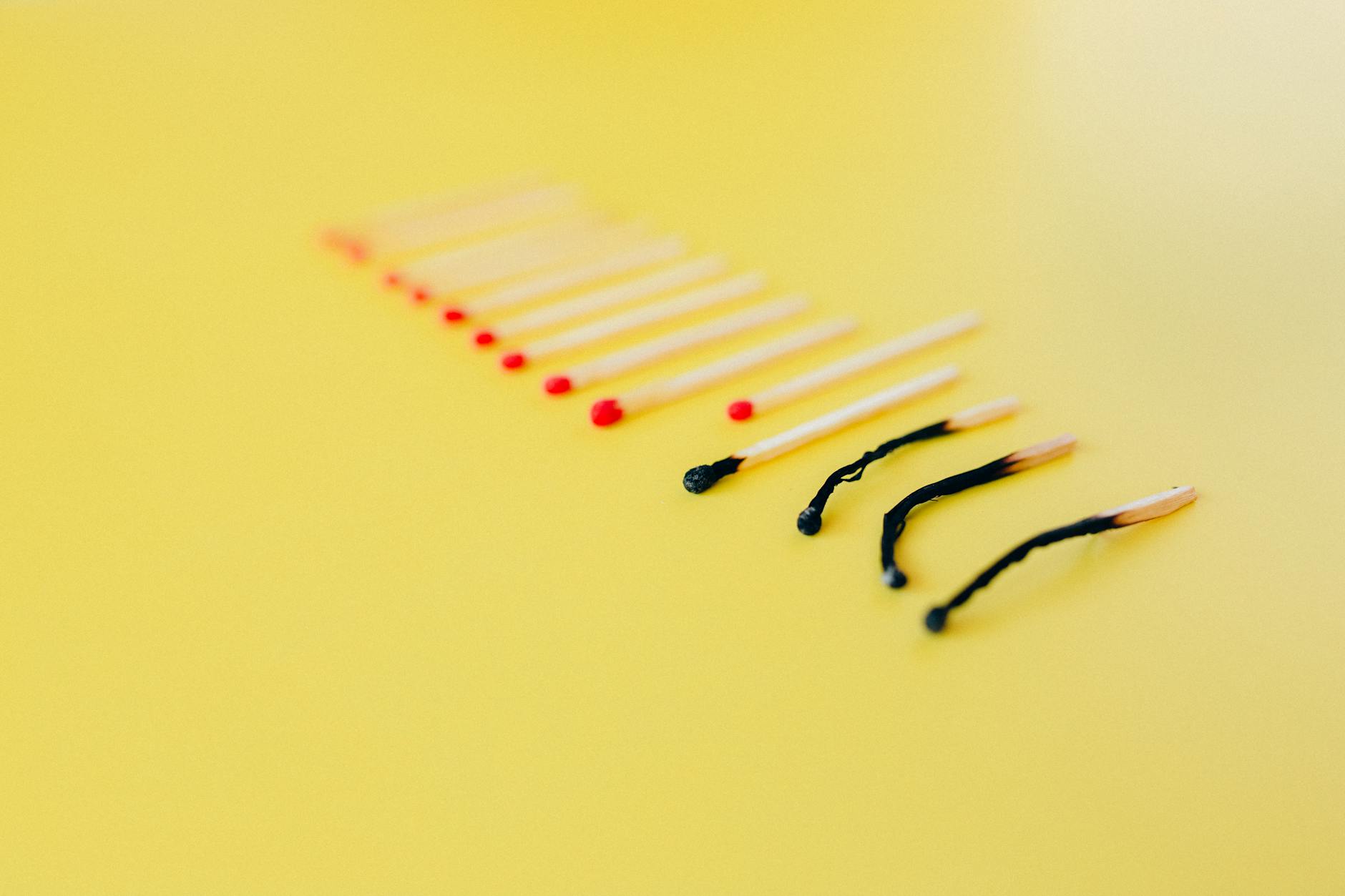
There’s a strange paradox I keep running into lately, and it’s one that doesn’t neatly resolve itself. On paper, I’m busy. My calendar has things on it. My days are full of obligations, projects, conversations, responsibilities, and self-imposed goals. Yet emotionally and mentally, a lot of the time, it doesn’t feel that way. It feels quieter than it should. Less frantic. Less overwhelming. And that leads me to a looping question I can’t quite shake: am I actually less busy than I used to be, am I simply better at managing my time, or am I doing too much and living so close to burnout that I no longer recognize its warning signs?
This question doesn’t come from a place of humblebrag productivity culture nonsense. It comes from genuine confusion. Because there have been periods in my life where being busy felt like drowning. Everything pressed in at once. Every task felt urgent. Every interruption felt like an attack on already-frayed nerves. Now, the volume knob feels turned down. The work is still there, but the panic isn’t. And that absence is unsettling in its own way, because I don’t know if it’s growth, adaptation, numbness, or something more dangerous hiding in plain sight.
Part of me wants to believe this is just improved time management. That I’ve finally learned how to structure my days in a way that doesn’t constantly drain me. That I’ve figured out how to batch tasks, prioritize what actually matters, and let the rest fall away without guilt. There’s evidence for this, too. I’m more deliberate about when I work and when I rest. I don’t jump at every notification anymore. I’ve learned, slowly and imperfectly, how to say no. I’ve also learned that not everything deserves the same emotional weight, even if it feels important in the moment.
But time management isn’t just about schedules and lists. It’s about boundaries. And boundaries are something I used to be very bad at. I said yes to everything because I thought saying no made me unreliable or unkind. I overcommitted because I equated busyness with worth. If I wasn’t exhausted, I assumed I wasn’t trying hard enough. Compared to that version of myself, today’s version does feel calmer. Less busy, even when the workload is technically similar or greater. That points toward growth, not danger. Or at least, that’s what I tell myself on good days.
Still, there’s another possibility that keeps nagging at me. Maybe the reason everything feels quieter is because I’m operating in a constant low-level state of burnout. Not the dramatic, collapse-on-the-floor kind. Not the kind that forces you to stop. But the subtle kind that becomes your baseline. The kind where exhaustion feels normal, where motivation comes and goes unpredictably, where emotional reactions are muted just enough that nothing feels urgent anymore. If that’s the case, then “less busy” isn’t peace. It’s numbness.
Burnout doesn’t always announce itself with sirens. Sometimes it creeps in slowly, disguising itself as competence. You get better at functioning while depleted. You learn how to keep moving even when your internal reserves are low. You become efficient not because you’re energized, but because inefficiency costs too much. Over time, that efficiency can feel like calm. And calm can feel like balance. But underneath it, there’s a constant tension, like a wire pulled too tight, always one unexpected demand away from snapping.
What complicates this even further is that I genuinely like being busy, to a point. I like having projects. I like having momentum. I like the feeling of progress, of building something over time. Idleness doesn’t always feel restful to me; sometimes it feels hollow. So when I’m occupied but not overwhelmed, it feels ideal. The problem is that liking busyness doesn’t make me immune to burnout. In fact, it might make me more vulnerable to it, because I’m less likely to notice when I’ve crossed the line.
There’s also the reality that being busy doesn’t always mean being mentally engaged. Some tasks take up time without taking up emotional space. Others are emotionally draining even if they don’t take long. A single difficult conversation can cost more energy than hours of routine work. So when I say I feel less busy, what I might really mean is that I’m spending less time in emotionally chaotic states. Fewer emergencies. Fewer crises. Fewer situations that demand immediate, intense responses. That kind of busyness is the worst kind, and maybe I’ve simply managed to reduce it.
But then again, maybe I’ve just gotten used to carrying it.
Another layer to this is how time itself feels different now. Days blur together more easily. Weeks pass faster than they used to. When you’re constantly doing something, time can paradoxically feel both full and empty. Full because there’s always something to do, empty because there’s rarely space to reflect on it. That distortion makes it harder to assess whether I’m actually overloaded or just moving through time more smoothly than before.
I also can’t ignore the cultural pressure to always be productive. We live in a world that rewards output, not sustainability. Burnout is often treated as a personal failure instead of a predictable response to constant demands. In that environment, learning to function while exhausted is praised. So if I’ve become very good at that, I might be mistaking survival for balance. I might be mistaking the absence of panic for the presence of health.
There are moments that make me suspicious of myself. Times when I suddenly crash for no obvious reason. Days where motivation evaporates and even small tasks feel heavy. Nights where rest doesn’t quite restore me. These aren’t dramatic breakdowns, but they’re data points. They suggest that something underneath the surface isn’t fully aligned. If I were truly less busy in a healthy way, wouldn’t rest feel more effective? Wouldn’t recovery come faster?
At the same time, I don’t want to pathologize stability. There’s a risk in constantly interrogating your own mental state, especially when things are mostly okay. Not every quiet period is a warning sign. Sometimes calm is just calm. Sometimes competence really is just competence. And sometimes the discomfort comes not from burnout, but from unfamiliarity. When chaos has been the norm, peace can feel suspicious.
What I keep circling back to is awareness. The danger isn’t being busy. The danger is being disconnected from how that busyness affects you. If I’m asking these questions at all, that might be a good sign. It means I haven’t completely lost touch with myself. I’m still checking in, still noticing patterns, still willing to adjust if something feels off. Burnout thrives in denial. Reflection, even uncertain reflection, pushes against it.
Maybe the answer isn’t one thing or another. Maybe it’s all of them, layered together. Maybe I am better at time management, and maybe that has genuinely reduced the stress of my workload. Maybe I am doing a lot, but in a way that’s more aligned with my values, so it feels lighter. And maybe, at the same time, I’m closer to burnout than I realize, simply because the world makes it hard not to be. These possibilities don’t cancel each other out. They coexist.
The real question, then, isn’t “am I busy or not?” It’s “am I sustainable?” Am I building a life where effort and rest are in conversation with each other, or am I just optimizing my way through exhaustion? Am I listening to early warning signs, or am I waiting for a breaking point to force my hand? Those are harder questions, and they don’t have clean answers. But they feel more honest.
For now, all I can do is keep paying attention. Keep noticing how my body and mind respond to the pace I’ve set. Keep adjusting when something feels off, even if I can’t fully articulate why. Maybe feeling less busy is a sign that I’m finally learning how to exist without constant urgency. Or maybe it’s a reminder to slow down before the quiet becomes emptiness. Either way, the fact that I’m thinking about it tells me I’m not completely asleep at the wheel. And that, at least, feels like something worth holding onto.

Leave a Reply