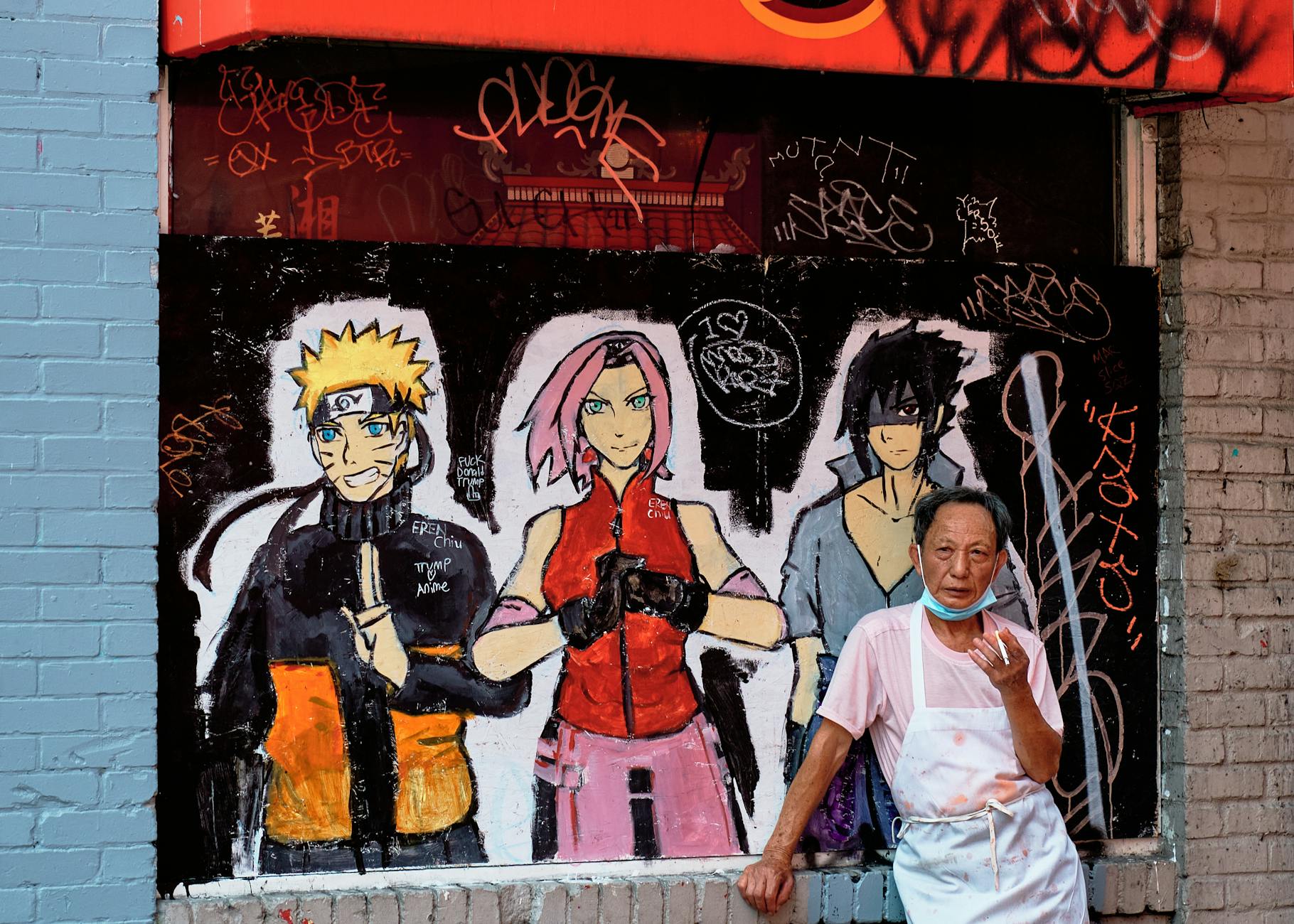
There’s something about Naruto’s story that hits in a way few fictional characters ever have for me. I’ve never been a huge fan who watched every episode or kept up with all the arcs, but I know enough to understand the heart of his journey. Naruto Uzumaki was a loner, a kid growing up constantly bullied, shunned by those around him, and misunderstood. He wore a mask of energy and mischief, the kind of loud personality that hid a deep loneliness inside. And even though this is fiction, his experiences resonate with me on a very personal level because, in many ways, I know what it feels like to be that kid.
Growing up, I didn’t have a lot of friends. In grade school, social circles felt like a landscape I couldn’t navigate, like everyone had some map I’d never been handed. People didn’t notice me much, or worse, sometimes they noticed me for the wrong reasons, for being different, for being quiet, or for not fitting into their idea of what “normal” was. I had maybe one or two friends, the ones who still mean a lot to me today, but beyond that, school was mostly a lonely experience. Being around people didn’t always make me feel connected; it often made me painfully aware of the isolation. Watching Naruto—or even just knowing his story—felt like someone had put words to a part of me I didn’t fully understand at the time, someone had created a mirror that reflected that loneliness, that desire to be accepted and seen.
What makes Naruto’s story hit so deep isn’t just that he was lonely, it’s how he responded to it. Instead of letting that rejection define him, he turned it into a driving force. He wanted to be acknowledged, he wanted to belong, and he channeled that pain into something bigger than himself. That’s something I relate to in a personal way. Loneliness can either isolate you further or push you to find your place in the world, and I’ve felt both sides of that. There were days when I’d shrink away, when it seemed easier to disappear into myself than to try and break through invisible walls. And there were other days when that same feeling of being an outsider pushed me to create, to explore interests, to connect with people in ways that felt genuine and lasting. Naruto’s story validates both experiences, showing that loneliness isn’t the end of your story, that it can be a starting point for growth and self-discovery.
It’s interesting because I didn’t really understand all of this as a kid. I just knew that I was different and that I didn’t have a lot of people to share my days with. I envied the kids who seemed to have it all figured out, who had friends everywhere, who could blend into a group and feel safe. But at the same time, there was a quiet part of me that admired Naruto’s kind of resilience. Even though he was constantly bullied, even though people doubted him, he never let that define him entirely. He always believed in the possibility that things could change, that people could see him for who he truly was. That belief, that spark, is something I carried with me even without realizing it. It became part of the way I navigated friendships and connections later on.
Meeting people I could call true friends didn’t really happen until high school. It was a slow process, filled with awkward attempts, some failures, and a lot of trial and error in learning how to connect with others in a meaningful way. Looking back, I can see how much those early experiences shaped me. The isolation, the few friendships that survived the test of time, they all created a foundation for empathy, for understanding what it means to truly appreciate someone’s presence in your life. Naruto’s journey mirrors that in a sense. His loneliness teaches him empathy. It makes him see others in ways that those who have always been surrounded by friends might never understand. And I think that’s why his story resonates so much: it’s not just a tale of struggle, it’s a testament to what you can learn from struggle, the depth of connection you can build once you’ve known what it means to be truly alone.
Even though I haven’t watched every Naruto episode, even though I’ve mostly just absorbed the story secondhand, the emotional truth of it still lands. Loneliness, rejection, feeling unseen—these aren’t abstract concepts for me. They are lived experiences, and seeing them reflected in Naruto’s story is both comforting and painful at the same time. Comforting because it tells me that the feelings I had were valid, that my experiences matter, and that they don’t have to define the entirety of my life. Painful because it reminds me of the raw, unfiltered moments of isolation I endured, the times I felt invisible or unworthy of connection. But in that pain, there’s also a sense of recognition, a reminder that even characters in fiction can carry the weight of human experience, and that resonance can be incredibly powerful.
Another part of Naruto’s story that hits deep is the idea of transformation. He didn’t just want to survive his loneliness, he wanted to change it, to shape it into something meaningful. That’s something I’ve always admired, even subconsciously, in the people I’ve looked up to, in the ways I’ve approached my own life. You can’t undo the years of feeling like an outsider, but you can choose what that experience becomes, how it informs the person you are, how it drives the choices you make and the relationships you build. Naruto embodies that potential for growth, and I see echoes of it in myself and in the few close friendships I managed to cultivate. The years of solitude taught me to value connection in ways that casual friendships never could, and it taught me patience, resilience, and a kind of quiet courage that doesn’t always get recognized but is just as real as any loud victory.
I think part of the reason Naruto’s story resonates with me is because it’s not just about being lonely, it’s about striving despite loneliness. It’s about existing in a world where people might not see you, where you might not feel included, but still believing that you can make a difference, still believing that you can carve out your own place, still believing that your story matters. That idea has stayed with me throughout my own life. Even when I felt unseen, I held onto the hope that the connections I longed for were possible, that the people I would call friends were out there, and that eventually, I would find my place. It’s that hope, that quiet defiance in the face of isolation, that Naruto represents, and it’s a sentiment I carry with me every day.
There’s also something about the way Naruto handles failure and rejection that resonates with my own experiences. Being bullied, being lonely, being overlooked, it can create this sense of permanent limitation, like the world has already decided where you belong. Naruto defies that. He fails, he gets hurt, he’s rejected, but he keeps moving forward. That’s a lesson I’ve had to learn myself, in smaller, less dramatic ways. Social missteps, awkward interactions, the slow process of finding people who truly understand you—it’s all a kind of microcosm of Naruto’s struggles. And seeing him persist, seeing him eventually find recognition and acceptance, makes the hard parts of my own journey feel less isolating, less like I’m alone in navigating a difficult path.
Another layer to Naruto’s story that connects with me is the complexity of identity. He’s seen as a troublemaker, as someone others fear or dismiss, but underneath that exterior, he’s vulnerable, hopeful, and deeply empathetic. That duality, the way he has to perform a version of himself just to survive, feels very familiar. Growing up, I often had to navigate who I showed to the world versus who I felt like inside. I learned early on that fitting in sometimes required masks, and that being authentic could make you a target. Naruto’s journey reminds me that the masks we wear are not failures—they are tools for survival, and that beneath them, our true selves still exist, waiting to be understood by the right people.
Even now, reflecting on this, I realize how much Naruto’s story is about the slow, patient work of building a life and relationships that matter. It’s about enduring the hard years, learning from them, and eventually creating bonds that are deep and lasting. My early experiences of loneliness shaped me, yes, but they also set the stage for friendships that have stood the test of time. They made me value the people who do see me, who understand me, who are willing to stick around despite my flaws and quirks. In that sense, Naruto’s story is timeless, because it mirrors a fundamental human experience: the desire to be seen, understood, and accepted for who we truly are, and the courage to keep striving even when that seems impossible.
I think that’s why Naruto continues to resonate with people like me. It’s not just about ninjas or battles or epic story arcs. It’s about the universal struggles of loneliness, identity, and perseverance. It’s about the way our early experiences of isolation can shape us, sometimes painfully, sometimes in ways that ultimately prepare us for deeper connection. And it’s about hope, the idea that even when the world seems indifferent or cruel, we can still find our place, still find people who matter, still create meaning in our own lives. That combination of realism and optimism, struggle and triumph, is what makes Naruto’s story so powerful for me personally.
In the end, I may not have grown up watching Naruto every week, but his story is part of my story in a way. His loneliness, his struggles, his drive to be acknowledged and understood—they echo my own experiences. They remind me of the isolation I felt in grade school, the few friendships that mattered, and the eventual connections that brought light to otherwise lonely years. Naruto teaches that pain does not have to define you, that perseverance is a form of quiet strength, and that even in solitude, there is potential for growth, for understanding, and for meaningful connection. And that is a lesson I carry with me, a reminder that even if the world feels isolating at times, there is hope, there is connection, and there is a place where we can belong.
It’s remarkable how a fictional character can feel so real, so intimately connected to your personal experiences. For me, Naruto isn’t just an anime character. He’s a reflection of those lonely years, a companion through struggles, and a symbol of resilience that continues to inspire. Even without watching every episode, I understand the heart of his story, and it resonates because it mirrors a part of my own life that is deeply personal. The loneliness, the few friendships that survived, the lessons learned through isolation—all of it ties into the universal themes Naruto embodies. And that’s why, nearly a decade later, thinking about his journey still hits deep, still makes me feel seen, and still reminds me that even in the loneliest times, there’s hope for connection, understanding, and ultimately, belonging.
Even now, when I reflect on those early years, I can see the ways I’ve grown because of them. Naruto’s story validates that growth. It reminds me that the quiet persistence of a lonely child can transform into empathy, resilience, and meaningful relationships. It reminds me that the experiences of being different, of being bullied, of struggling to find one’s place in the world, are not wasted—they shape us in ways that are profound and lasting. And it reminds me that even when life feels isolating, even when it feels like the world isn’t paying attention, there is value in holding on, in believing that connection is possible, and in striving to be seen for who you truly are.
Naruto’s backstory hits deep for me because it mirrors my own journey from isolation to connection. It resonates because it validates my experiences, it reflects my struggles, and it illuminates the hope that has guided me through years of loneliness. It is a story of resilience, empathy, and the relentless pursuit of belonging. And for that, it will always hold a special place in my life, a reminder that even the loneliest among us can find our way, and that our experiences, no matter how painful, can ultimately shape us into people capable of deep, meaningful connection and understanding.

Leave a Reply